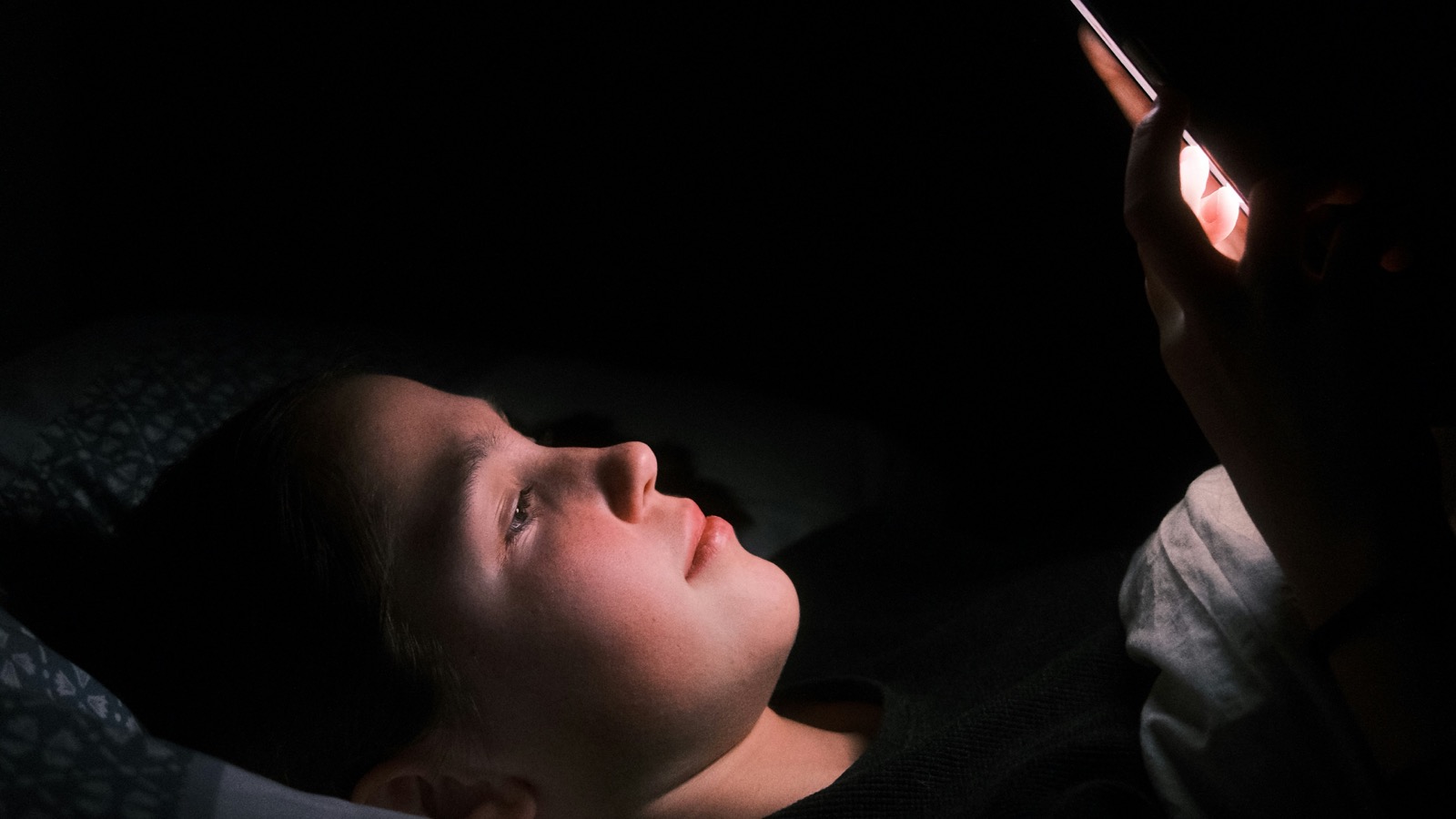
It's 23:40. You said you'd be asleep by 23:00. You're not tired enough to sleep, but you're tired enough to know you should. And instead of putting the phone down, you open one more thing. Then one more.
Nothing is stopping you from going to bed. That's the strange part. You're not working. Nobody needs you. There's no emergency. You're just... not going. And you'll pay for it tomorrow with a lower recovery score, a slower first hour, and a resting heart rate that sits a few beats higher than it should.
Researchers have a name for this: bedtime procrastination. In Chinese social media it picked up a better one — revenge bedtime procrastination — and the phrase stuck because it captures the feeling precisely. The late hours are the only part of the day nobody else owns, so you take them back from your own sleep.
It's not laziness, and it's not insomnia. It's a self-regulation problem with a very specific structure, and understanding that structure is what makes it fixable.
TL;DR: Bedtime procrastination is delaying sleep later than you intended, with no external reason preventing you from going to bed, while knowing it will cost you. A 2022 meta-analysis found it's moderately associated with shorter sleep duration, worse sleep quality, and more daytime fatigue. It's linked to low self-regulation, evening chronotype, and low daytime autonomy — not to a lack of caring about sleep. It's different from insomnia (where you can't sleep) and from a delayed sleep phase (where your body clock has genuinely shifted). The fixes that work are structural rather than motivational: earlier wake time, if-then planning for the last hour, making the wind-down rewarding, digital friction, and giving yourself some autonomy earlier in the day. Your wearable gives you the feedback loop — sleep consistency and next-morning HRV show you whether it's working.
YouTube: Related video
What bedtime procrastination actually is
The term comes from a 2014 paper by Floor Kroese and colleagues, published in Frontiers in Psychology, which defined it as failing to go to bed at the intended time, while no external circumstances prevent a person from doing so. That definition has three moving parts, and all three have to be true:
- You go to bed later than you intended. Not later than some ideal, but later than your own plan.
- Nothing external is stopping you. You're not on shift, not caring for a child, not stuck in a crisis. The obstacle is internal.
- You know it will cost you. You're not oblivious. You're aware that tomorrow gets worse, and you do it anyway.
That third condition is what makes it interesting. People who procrastinate at bedtime aren't confused about sleep. They tend to value it. They just don't act on that value in the moment — the same gap between intention and behaviour that shows up in every other area of procrastination, only with a physiological bill attached.
In the original research, bedtime procrastination correlated with lower self-regulation, higher general procrastination, and more reported fatigue and insufficient sleep. Notably, it wasn't just a proxy for "busy people." The absence of an external cause was central to the concept.
Why it's called "revenge"
The "revenge" framing came later, and it adds the part psychology was missing: motivation.
If your day is fully spoken for — meetings, commute, messages, chores, other people's needs — the hours after everyone else is done are the first time you're not accountable to anyone. Staying up feels like reclaiming autonomy, even when the only thing you do with that time is scroll. You're not enjoying the phone. You're enjoying not being on someone else's clock.
That's why the usual advice ("just go to bed earlier") fails so completely. It reads as one more demand on a person who is already running out of compliance. The behaviour isn't a failure to understand the trade-off. It's a small act of resistance against a day that had no room in it.
Which points at something genuinely useful: if autonomous time is the thing you're missing, the fix may involve changing your daytime, not just your nighttime willpower.
What the research shows
The evidence here is surprisingly consistent for a behaviour with such a fuzzy name. A 2022 systematic review and meta-analysis in Sleep Medicine Reviews ("Go to bed!") pooled the correlations and found bedtime procrastination was:
- Moderately negatively associated with sleep duration (z = −0.31)
- Moderately negatively associated with sleep quality (z = −0.35)
- Moderately positively associated with daytime fatigue (z = 0.32)
Those aren't trivial effect sizes. Losing sleep duration and quality at the same time, with more fatigue the next day, is a compounding loop: tired days make evening self-regulation harder, which makes the next night's procrastination more likely.
A more recent meta-analysis in Frontiers in Psychology looked at psychological distress in university students and found consistent associations with depression, anxiety, and stress symptoms — with evidence pointing toward a bidirectional relationship rather than a one-way cause.
The strongest individual predictors that keep showing up:
- Low self-regulation and depleted self-control. Willpower is finite, and by 22:00 most people have spent theirs. Research on daily variation has found the link between weaker executive functioning and bedtime procrastination is strongest in evening chronotypes.
- Evening chronotype. If your biology runs late, the gap between your schedule and your body clock creates more opportunity to delay.
- Low daytime autonomy and high daily demand. The "revenge" mechanism — not yet as well quantified, but consistent with the broader procrastination literature.
- Higher general procrastination and impulsivity. Bedtime delay often travels with other delay.
What's not a strong predictor: not knowing that sleep matters. Everyone knows.
How it's different from insomnia
This distinction decides which fix you need, and it gets blurred constantly.
| Bedtime procrastination | Insomnia | Delayed sleep phase | |
|---|---|---|---|
| What's happening | You don't go to bed | You go to bed and can't sleep | Your body clock runs genuinely late |
| Falling asleep | Usually fine once you're in bed | The problem | Fine, but only later |
| Timing pattern | Late, variable | Variable, unpredictable | Consistently late, stable |
| What helps | Structure, planning, friction | CBT-I, clinical assessment | Light timing, gradual shifts |
The giveaway is your own behaviour: if you're tired, in bed, and staring at the ceiling, that's insomnia and it deserves proper treatment — sleep restriction and stimulus control (CBT-I) is the first-line approach and works. If you're tired, not in bed, and actively choosing to stay up, that's procrastination.
Delayed sleep phase is different again. There, your circadian rhythm has shifted so that falling asleep at 23:00 isn't realistically available to you. Prodding yourself to go to bed early doesn't fix it — shifting your wake time and light exposure does. It also often coexists with bedtime procrastination, which is why "I'm just a night owl" isn't always a complete explanation.
What it does to your recovery data
This is where the habit becomes visible instead of just annoying. Short sleep, on its own, produces a predictable next-morning pattern:
- HRV down. A single night of shortened sleep is usually enough to move it.
- Resting heart rate up. A few beats, sometimes more, depending on how short and how late.
- Sleep score down, driven more by timing and duration than by stage composition.
- Sleep consistency hit. Bedtime procrastination doesn't just shorten sleep, it irregularizes it — and irregular sleep timing is associated with worse outcomes than the same shortfall on a consistent schedule.
That last point matters more than people expect. Going to bed at 23:00 every night and sleeping six and a half hours is a different physiological situation than sleeping seven hours on some nights and five on others. The body reads the regularity, not just the total. We've covered why that is in why sleep consistency matters more than sleep duration, and bedtime procrastination is one of the main mechanisms by which consistency gets destroyed.
So the wearable feedback loop is real: one late night shows up in tomorrow's HRV, and a week of them shows up as a lower baseline. That's useful — but only if you treat it as information rather than as a scold.
Why willpower is the wrong lever
Trying to fix bedtime procrastination with resolve is like trying to fix dehydration with resolve. The problem isn't insufficient commitment; it's that you're asking the most depleted version of yourself to do the hardest thing of the day.
Better levers, roughly in order of how much they usually help:
Fix the wake time first, not the bedtime. You can't force sleep onset, but you can force a get-up time. A consistent, slightly earlier alarm — with light exposure immediately after, ideally outdoors — pulls the whole system earlier over one to two weeks. Trying to move bedtime directly tends to just produce time spent awake in bed, which is its own problem.
Use if-then planning for the last hour. Implementation intentions work better than intentions because they pre-decide the moment. Not "I'll go to bed earlier," but "if it's 22:30, then I put the phone on the charger in the kitchen and start the wind-down." The decision is made by a rested version of you at 15:00, not the depleted one at 23:15.
Add friction in the right place, not moralizing. Phone charging outside the bedroom. Social apps logged out. A physical alarm clock. The goal isn't abstinence, it's making the default behaviour 20 seconds harder than the alternative. You will not out-argue a phone at bedtime.
Make the wind-down a thing you'd actually choose. Bedtime procrastination often fills a reward vacuum. If the only planned evening activity is "go to bed," staying up is the rational refusal. Give yourself something to look forward to that isn't a screen — a bath, a chapter of fiction, stretching, tea, music, a wind-down routine that isn't homework. The evening needs to contain pleasure, or it will keep leaking into the night.
Protect some autonomy earlier. If the whole day belongs to other people, the late-night rebellion will keep happening and no amount of phone rules will fix it. Twenty minutes of genuinely yours at 14:00 is cheaper than two hours of exhausted scrolling at midnight.
Reconsider caffeine and light, in that order. A late-afternoon coffee is a documented sleep-quality tax, and it's a much easier variable to change than your sense of autonomy. Bright light after dark — including from screens — delays melatonin timing, which pushes your natural sleep window later and makes the 23:00 bedtime feel impossible. That's not a moral failing either; it's measurable physiology.
Be kinder to yourself about it. This sounds soft, but there's research linking higher self-compassion to less bedtime procrastination. Harsh self-criticism after a late night adds stress and reduces the resources you need to do better the next night — a loop that closes on itself.
A two-week reset you can actually run
The point isn't to become a person who loves going to bed at 22:00. The point is to shrink the gap between your intended bedtime and your actual one, measurably.
- Pick a wake time and hold it for 14 days. Same time every day, including the weekend. This is the foundation, and skipping the weekend version undoes the week.
- Get light in your eyes within 30 minutes of waking. Outdoors if possible. This is the strongest signal you have for pulling your clock earlier.
- Set a hard "shutdown" alarm 60 minutes before your intended bedtime. Not a bedtime alarm — a stop-starting-things alarm.
- Write one if-then rule for the shutdown moment. Mine would be: "If the shutdown alarm goes, then the phone goes to the kitchen and the kettle goes on."
- Keep caffeine before noon for the two weeks. Note the difference in your sleep score.
- Track three things, weekly. Average sleep duration, bedtime standard deviation (how much your bedtime moves night to night), and 7-day average HRV. Century AI shows the recovery and sleep side of this; the consistency number is the one that moves first when you fix the bedtime gap.
- Expect a bumpy first week. Your sleep pressure has to resettle. Days 3–5 usually feel worse before they feel better, and that's when most people quit.
What you're looking for after 14 days: a smaller bedtime spread, more total sleep without a heroic effort, and a morning HRV that's climbing back toward baseline. If bedtime is still slipping, that's information too — it usually means the evening has no reward in it yet.
Frequently asked questions
Is revenge bedtime procrastination a real diagnosis? No. It's a descriptive term from the research literature on bedtime procrastination (a self-regulation and procrastination phenomenon), not a clinical diagnosis in the DSM or ICSD. That doesn't make it less useful — it describes a real, measurable behaviour with measurable sleep costs.
Is it the same as being a night owl? Overlapping but not identical. An evening chronotype makes bedtime procrastination more likely, but the two are separate: you can be a night owl who goes to bed exactly when you planned, and you can be a morning type who still delays sleep for three hours every night.
Does screen time cause it? Screen time is a vehicle, not the cause. The procrastination usually comes first — you want the time back — and the phone is the easiest way to spend it. That's why phone bans alone often fail. They remove the tool but leave the underlying deficit.
Can it worsen HRV and resting heart rate? Yes, indirectly but reliably. Short sleep and irregular sleep timing both reduce next-day HRV and raise resting heart rate. A single late night is a blip; a consistent pattern shows up as a lower baseline over weeks.
What if I'm tired but still don't want to sleep? That's the signature of the problem, and it usually means the issue is psychological, not physiological. Wanting to sleep and resisting sleep at the same time is the definition of the conflict. Start with the wind-down being rewarding and the wake time being fixed, rather than trying to want sleep more.
Should I take melatonin? Melatonin is most useful for jet lag, shift work, and delayed sleep phase — timing problems. Bedtime procrastination is a behaviour problem, and a sleep aid doesn't fix a behavioural loop. It might help you fall asleep once you're in bed, which was never the bottleneck.
The bottom line
Revenge bedtime procrastination isn't a character flaw and it isn't insomnia. It's the predictable result of a depleted self-regulation system meeting an evening that promised no reward and a day that offered no autonomy. The cost is real: shorter sleep, worse sleep quality, more fatigue, and a recovery baseline that quietly slides.
The fix isn't more discipline at 23:00. It's an earlier and consistent wake time, one pre-decided rule for the shutdown moment, friction where the phone lives, and an evening that contains something you actually want.
Your watch won't tell you why you stayed up. But it will tell you — clearly and the next morning — what it cost, and whether the change you made is working. That's a better feedback loop than guilt, and unlike guilt, it changes.
Century AI helps you understand your body with a daily health score, recovery score, and sleep insights — using the watch you already wear.