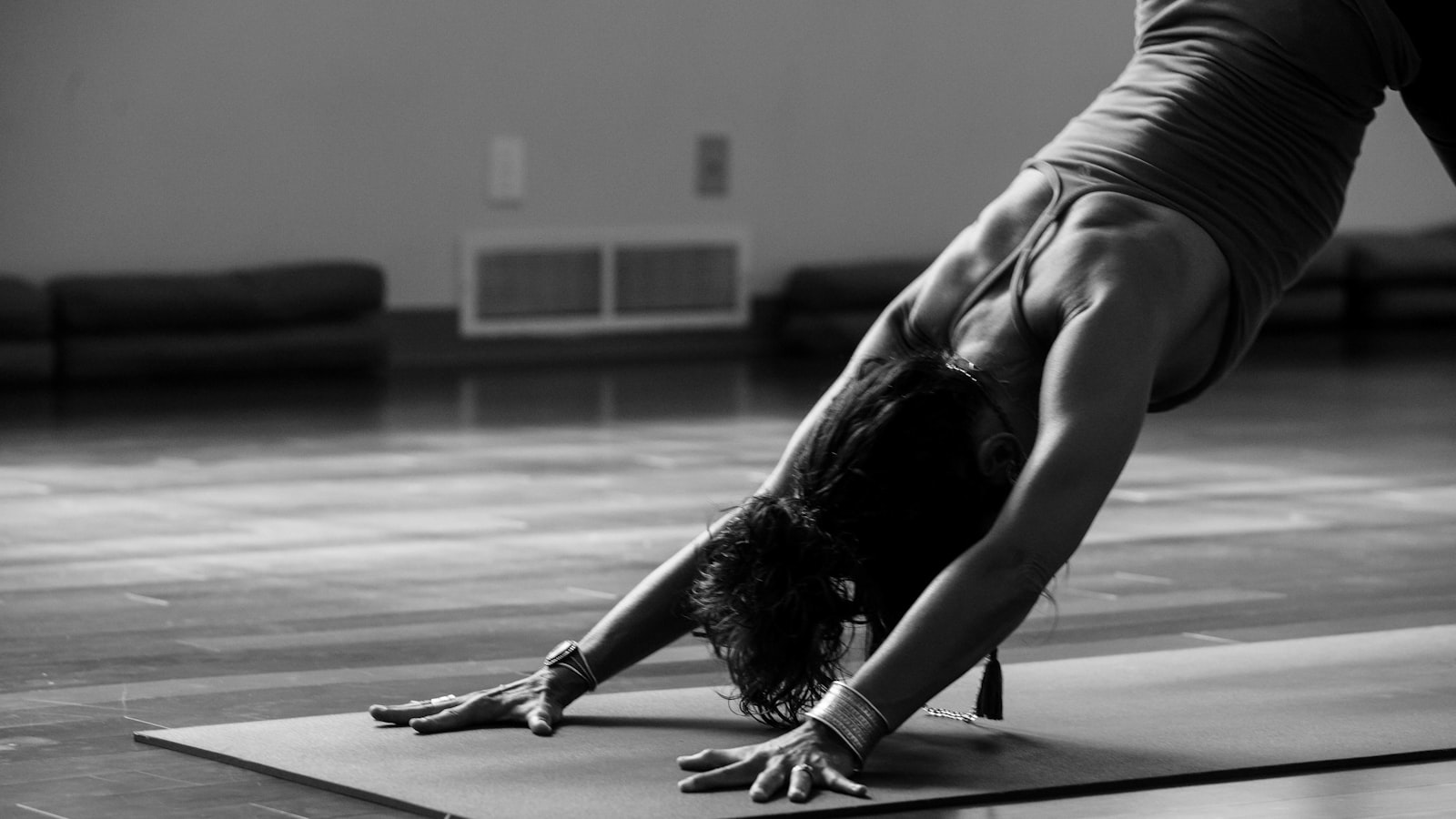
If you grew up in any school gym, you were probably told to touch your toes, hold it for ten seconds, and then go run a mile. That pre-exercise static stretch routine has been the default for decades. It's also, according to a mountain of research, mostly the wrong tool for the job.
The short version: dynamic stretching belongs before your workout. Static stretching belongs after it, or as its own dedicated session. Getting the two mixed up won't hurt you, but it can leave you slightly weaker at the start of your session and doesn't give you the injury protection you probably think it does.
This guide covers what the research actually shows for each type, why the old "stretch before you run" advice stuck around anyway, and a practical before-and-after template you can use today.
TL;DR: Dynamic stretching (moving while you stretch, like leg swings and walking lunges) is the right choice before exercise. It raises muscle temperature, primes the nervous system, and doesn't hurt performance. Long static holds (>60 seconds per muscle) before explosive or strength work can temporarily reduce power output, and static stretching before exercise does not meaningfully reduce injury risk on its own. Static stretching is still valuable, but it belongs after your session or on rest days, where it improves flexibility over time. And no type of stretching meaningfully reduces next-day muscle soreness, despite what the gym folklore says.
YouTube: Related video
First, what each type actually is
People use "stretching" as one word, but the two main styles are mechanically different animals.
Static stretching means moving into a position and holding it. You lengthen the muscle, reach a point of mild tension, and stay there for anywhere from 15 seconds to a few minutes. Think touching your toes, a standing quad stretch, or the classic hurdler stretch. Nothing moves while you hold.
Dynamic stretching means moving a joint through its full range of motion while the muscles are actively working. Leg swings, walking lunges, arm circles, hip circles, and high knees all count. You're not holding anything still, you're rehearsing movement patterns with increasing range.
| Dynamic stretching | Static stretching | |
|---|---|---|
| How it feels | Moving, active, slightly warm | Still, held, gradually deepening |
| Best timing | Before a workout | After a workout or on rest days |
| Main job | Warm up muscles + rehearse movement | Improve flexibility over time |
| Hold time | N/A (continuous reps) | 15–60+ seconds per muscle |
| Example | Leg swings, walking lunges, arm circles | Hamstring hold, quad stretch, calf stretch |
The confusion is understandable. Both involve "stretching" a muscle. But your body treats them very differently depending on what's coming next.
The injury prevention question
Here's the belief that refuses to die: stretch before exercise and you'll avoid injuries. It makes intuitive sense, and it's what generations of coaches told us. The evidence, however, doesn't support it.
The most cited analysis comes from Lauersen et al., published in the British Journal of Sports Medicine in 2014. The researchers pooled data from dozens of randomized controlled trials covering tens of thousands of participants. Their conclusion was blunt: exercise programs designed to prevent sports injuries worked well overall, but the benefits came almost entirely from strength training and programs that combined multiple components. Stretching, on its own, showed no significant injury-reducing effect.
That doesn't mean stretching is pointless. It means the specific job of injury prevention belongs to other things, namely muscle strength, balance, and movement quality. If your goal is "don't get hurt," your time is better spent on a strength routine and a proper warm-up than on 10 minutes of holding static stretches.
Dynamic stretching plays a supporting role here because it's part of an effective warm-up. A warm-up that raises your heart rate, increases blood flow, and takes your joints through their working range is what prepares your body for the demands of exercise. Dynamic stretching is a natural fit inside that warm-up. Static stretching is not, because it doesn't raise body temperature or heart rate much at all.
The performance question
If you're about to lift, sprint, jump, or play a sport, you care about power output. And this is where static stretching has a genuine, measurable downside.
The classic finding, summarized in a widely cited 2011 review by Behm and Chaouachi in Sports Medicine: long-duration static stretching immediately before strength or power activities can temporarily reduce maximal strength and power. The effect shows up most clearly when stretches are held for 60 seconds or more per muscle group, with minimal rest before the activity.
Here's the nuance most summaries leave out. A later review in Frontiers in Physiology (2019) dug into the earlier studies and found the picture is more subtle than "static stretching always kills performance." Short holds of 30–45 seconds per muscle, especially when followed by dynamic activity, have little to no meaningful effect on strength or power in most people. The big impairments come from marathon stretching sessions of several minutes per muscle, done right before explosive efforts, with no dynamic activity in between.
Practical translation:
- A quick pre-run stretch session of short holds? Probably fine for most people.
- Sitting in deep stretches for 2+ minutes per muscle, then immediately sprinting or doing max lifts? That's the recipe for a slightly weaker, less powerful start to your session.
- Dynamic stretching before your workout? It warms the tissues and rehearses the ranges you'll actually use, with no performance penalty. In many studies it slightly improves subsequent power and jump performance compared to doing nothing.
That last point matters more than most people realize. The warm-up isn't just about preventing injury. It's about getting more out of the session itself.
Stretching and muscle soreness
If you're sore after a hard session, stretching it out feels like the obvious remedy. It's also, unfortunately, largely a placebo when it comes to the actual muscle damage.
The Cochrane review by Herbert and colleagues, first published in 2007 and updated in 2011, looked specifically at whether stretching before or after exercise reduces delayed-onset muscle soreness (DOMS). Across all the randomized trials they could find, stretching before, after, or both before and after exercise did not produce a clinically meaningful reduction in soreness in healthy adults.
The studies measured soreness on standard scales over the days following exercise. Any differences between stretchers and non-stretchers were small enough that you wouldn't notice them in real life. If you want to understand why your legs ache two days after a hard workout, that's a separate story about muscle damage and the inflammatory response, which we covered in detail in our guide to why muscles get sore after working out.
Stretching a sore muscle might still feel good, and if it does, keep doing it. Just don't expect it to speed up tissue repair. For that, gentle movement, sleep, and nutrition do the heavy lifting.
What stretching is genuinely good for
If stretching doesn't prevent injuries and doesn't cure soreness, why do it at all? Because it has real benefits that are just less dramatic than the old claims:
- Range of motion. Consistent stretching, especially static stretching done regularly, measurably increases flexibility. This is the most robust effect in the literature.
- Comfort in everyday movement. Reaching overhead, bending down, getting up off the floor, and sitting comfortably all require usable range. As we age, maintaining that range is one of the cheapest ways to stay functional.
- Training your body to relax under tension. Static stretching is one of the few times most of us deliberately breathe slowly while holding a slightly uncomfortable position. That has spillover benefits for stress and recovery.
- It's a low-barrier habit. Stretching for ten minutes after a workout or while watching TV is accessible in a way that a second workout isn't. A habit you'll actually keep beats a perfect protocol you won't.
The honest framing: stretching is a flexibility and feel-good tool, not a force field against injury. That's a perfectly good reason to do it. It's just not the reason your high school coach gave you.
A practical before-and-after template
Here's a simple structure that follows the evidence without overthinking it.
Before your workout (5–8 minutes, dynamic):
- 1–2 minutes of easy movement to raise your heart rate. Jogging, jumping jacks, cycling, or a fast walk. You should feel slightly warm, not exhausted.
- Dynamic stretches for the muscles you'll use:
- Leg swings forward and sideways (for runs, squats, leg days)
- Walking lunges with a slight torso rotation
- Arm circles and shoulder rolls (for upper body days)
- High knees or butt kicks (for runs and sports)
- Hip circles or world's greatest stretch for full-body sessions
Each movement: 10–15 reps per side, smooth and controlled, taking the joint a little further each rep. Stop short of pain.
After your workout or on rest days (5–10 minutes, static):
Pick 4–6 stretches for the muscles you trained and hold each for 30–45 seconds:
- Standing or seated hamstring stretch
- Quad stretch (standing or side-lying)
- Glute stretch (figure-four, seated or lying)
- Calf stretch against a wall
- Chest stretch in a doorway
- Child's pose for the back
Breathe normally, relax into the position, and don't bounce. Mild tension is the goal; sharp pain is not.
How to know your warm-up is working
You don't need a lab to judge a warm-up, but a heart rate monitor gives useful feedback. A good dynamic warm-up should push your heart rate up into the lower aerobic zones, roughly what your watch calls Zone 1 or Zone 2 for your age. If your heart rate hasn't budged after five minutes of "warming up," you're probably moving too gently or statically. If you're already breathless, you've overshot and turned your warm-up into a workout.
Your watch also helps with the reverse question: how hard was your session, and how much warm-up does today need? After a heavy training day, your resting heart rate may be slightly elevated and your heart rate variability lower. On those days, a longer, gentler dynamic warm-up is the right call, because your body takes longer to come online. If you want the full picture of how recovery state changes your training decisions, we wrote about it in our guide to active recovery days and rest days.
One more wearable note: stretching itself is a quiet activity, and a well-timed evening static stretch session is one of the few things that can nudge your overnight heart rate down and your HRV up, because it forces you to slow down and breathe. It's not magic, but it's a pleasant addition to a wind-down routine. Tools like Century AI make it easy to spot those small wins, because they turn your watch data into a daily health score and recovery score. If you stretch regularly and your recovery trends improve, you'll actually see it, instead of guessing.
Summary
- Dynamic stretching before exercise: warms you up, rehearses movement, no performance downside. This is your pre-workout choice.
- Static stretching before exercise: doesn't prevent injuries on its own, and long holds before strength or power work can temporarily blunt output. Short holds are fine.
- Static stretching after exercise or on rest days: the right home for flexibility work. Done consistently, it reliably improves range of motion.
- Neither type meaningfully reduces muscle soreness. That's the domain of recovery fundamentals like sleep and easy movement.
- Stretching is a tool, not a ritual. Use it for the jobs it's good at, and stop feeling guilty about skipping the parts it can't do.
The simplest upgrade most people can make this week: swap the pre-workout toe-touch holds for five minutes of leg swings and lunges, and move your static stretching to after the session. Your performance won't suffer, your flexibility work stays in the routine, and you'll be working with the evidence instead of against it.
Century AI helps you understand your body with a daily health score, recovery score, and sleep insights — using the watch you already wear.