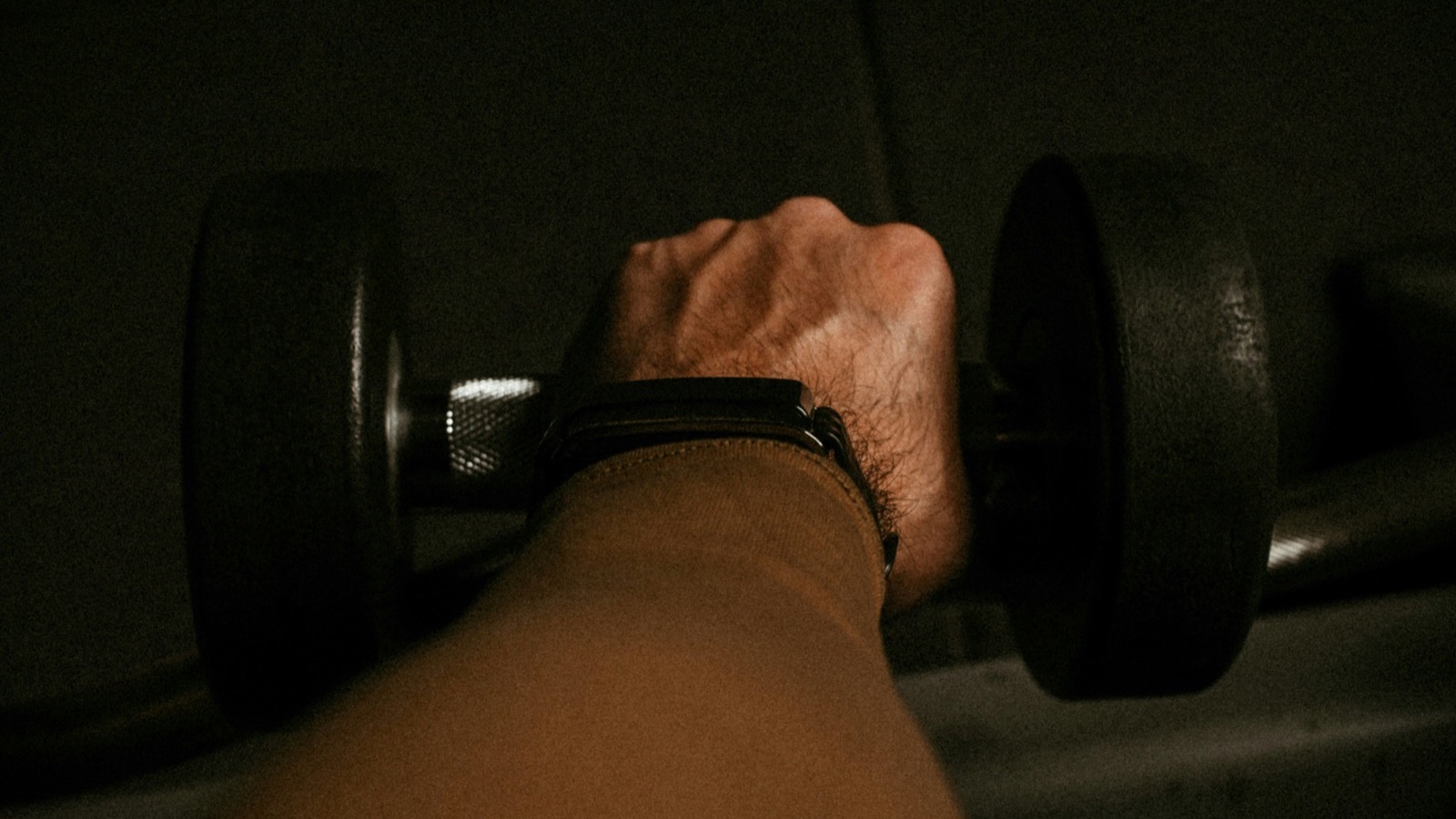
When researchers want a quick snapshot of someone's overall health, they don't always reach for a blood pressure cuff or a cholesterol panel. Increasingly, they reach for a handgrip dynamometer — a simple device that measures how hard you can squeeze. And what they've found is remarkable: grip strength turns out to be one of the most reliable predictors of how long you'll live.
It sounds almost too simple. How can the strength of your hand possibly tell you anything about your heart, your brain, or your lifespan? The answer lies in what grip strength actually represents — it's a proxy for total-body muscle strength, which itself reflects your metabolic health, your nervous system function, and your body's overall resilience.
YouTube: Related video
The research is hard to ignore
A 2024 study published in Scientific Reports analyzed NHANES data from over 8,000 adults and found that handgrip strength was inversely associated with all-cause mortality — meaning the weaker your grip, the higher your risk of dying from any cause during the follow-up period. The researchers concluded that absolute grip strength was "the optimal predictor of mortality," outperforming even normalized measures like grip strength relative to body weight.
Another major finding, published in The Lancet, showed that grip strength was a stronger predictor of cardiovascular mortality than systolic blood pressure. Let that sink in: how hard you can squeeze your hand told researchers more about your heart disease risk than your blood pressure reading.
A meta-analysis covering nearly 2 million participants reinforced the dose-response relationship: for every 5 kg decrease in grip strength, all-cause mortality risk rose significantly — even after adjusting for age, sex, and body composition.
Why grip strength reflects so much
Grip strength isn't just about your forearms. It's a window into several interconnected systems:
Muscle mass and quality. Grip strength correlates strongly with total-body lean muscle mass. As we age, we naturally lose muscle — a process called sarcopenia — and grip strength is one of the earliest and most reliable markers of that decline.
Nervous system health. Generating a forceful grip requires coordinated firing of motor neurons from your brain to your hand. Weakness can signal neurological issues long before other symptoms appear.
Metabolic health. Low muscle mass is associated with insulin resistance, chronic inflammation, and poor glucose regulation. Stronger hands tend to belong to metabolically healthier people.
Frailty and resilience. In older adults, grip strength predicts not just mortality but also risk of falls, hospitalizations, post-surgical complications, and loss of independence. It's a functional measure — it tells you what someone can actually do, not just what their lab values look like.
What's a "good" grip strength?
Grip strength norms vary by age and sex, but here are some general reference points measured with a handgrip dynamometer:
| Age Range | Men (kg) | Women (kg) |
|---|---|---|
| 20–29 | 47–54 | 28–33 |
| 30–39 | 47–53 | 28–32 |
| 40–49 | 44–51 | 26–30 |
| 50–59 | 40–47 | 24–28 |
| 60–69 | 35–42 | 21–25 |
| 70+ | 30–37 | 18–22 |
These are averages from population studies. If you're above these ranges, that's genuinely good news. If you're below, it's not a diagnosis — it's a signal worth paying attention to.
How to measure your own grip strength
You can buy a handgrip dynamometer online for $20–$30. They're simple devices: you squeeze as hard as you can, and a dial or digital readout shows your force in kilograms or pounds. Here's how to get an accurate reading:
- Adjust the grip so the handle rests on the middle phalanges of your fingers — not too wide, not too narrow.
- Stand upright with your arm at your side, elbow at 90 degrees.
- Squeeze as hard as you can for 3–5 seconds, exhaling as you go.
- Take three measurements per hand, with 30 seconds rest between each, and record the highest value.
Test both hands. Most people are about 10% stronger in their dominant hand. A significant asymmetry — more than 15–20% difference — can be worth mentioning to a healthcare provider.
How to improve your grip strength
Grip strength is highly trainable, and improvements come faster than you'd expect. Here's what works:
Dead hangs. Find a pull-up bar and simply hang from it. Start with 15–30 seconds and work up to 60+ seconds. This builds grip endurance and decompresses your spine at the same time — a two-for-one deal.
Farmer's carries. Pick up a heavy dumbbell or kettlebell in each hand and walk. Aim for 30–60 seconds of walking with challenging weight. This builds real-world grip strength and core stability simultaneously.
Wrist curls and reverse wrist curls. Old-school but effective. Use light-to-moderate weight with high reps (15–20). This targets the forearm flexors and extensors directly.
Towel hangs or thick-bar work. Wrapping a towel around a pull-up bar or using fat grip attachments makes any pulling exercise dramatically harder on your grip. Even hanging a towel over a bar and gripping the towel ends works.
Squeeze a gripper during downtime. Keep a grip trainer at your desk and do a few sets while reading or on calls. Consistency matters more than intensity here.
Two or three short sessions a week is enough to see measurable improvement within 4–6 weeks. And unlike some fitness goals that take months to show results, grip strength responds quickly — it's one of the most satisfying things to track.
What your wearable can (and can't) tell you
Most wearables don't measure grip strength directly, but they do track metrics that correlate with muscle function and overall resilience. Your Apple Watch or Garmin tracks resting heart rate, HRV, sleep quality, and VO2 max — all of which paint a picture of your body's underlying health.
Low HRV and elevated resting heart rate often accompany poor muscle recovery and systemic stress. When you combine these metrics in a platform like Century, you start to see connections: a week of poor sleep and rising resting heart rate might coincide with feeling weaker in the gym. That's not a coincidence — it's your nervous system telling you something.
Quick summary
- Grip strength is a powerful, research-backed predictor of longevity — in some studies, stronger than blood pressure
- It reflects total-body muscle mass, nervous system health, and metabolic resilience
- You can measure it at home with a $20 dynamometer in under two minutes
- Improvements come quickly with dead hangs, farmer's carries, and grip-specific training
- Pair grip strength trends with wearable data like HRV and resting heart rate for a fuller picture of your health
Grip strength might be the most underrated health metric you've never tracked. It's cheap to measure, quick to improve, and tells you something real about how your body is aging. If you're already tracking your sleep, steps, and heart rate, adding grip strength to the mix gives you one more data point — and it happens to be one of the most powerful ones available.
Century helps you understand your body with a daily health score, recovery score, and sleep insights — using the watch you already wear.